Williamson ether synthesis
specified-next: ready to implement as v2 guarded owner-vector rules.
Interactive Route Player
Use next/prev to step through the route: first the current state is shown without highlight, then the next ownership move is previewed, then the move is executed. If a route snapshot changes several ownership records, the player unfolds them one at a time. Drag a node to fix it; double-click a fixed node to release it.
HEG v2 State Sketches
These panels are rendered from ownership-structured HEG v2 objects. For specified-next examples they are state sketches, not yet products of executable v2 rules.
Williamson substrate HEG sketch
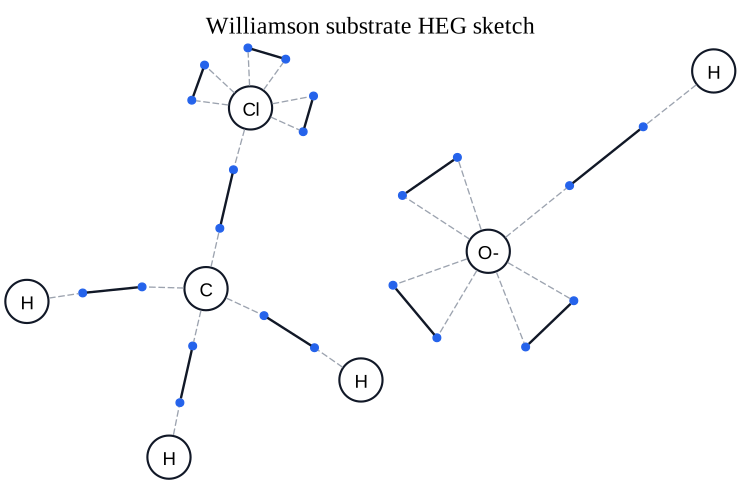
Alkoxide-like oxygen plus methyl chloride.
Williamson route step 1
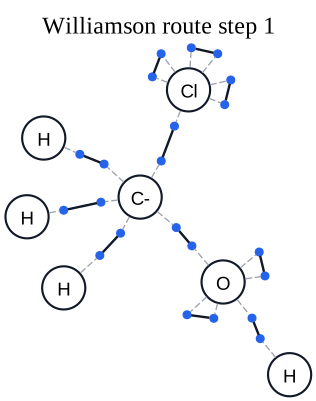
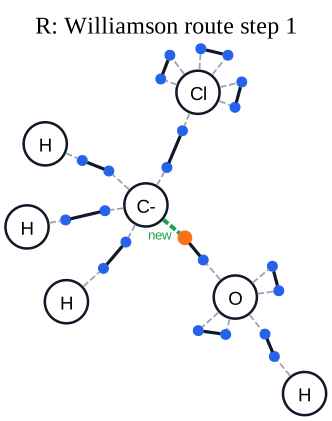
Primitive snapshot: alkoxide lone pair has become an O-C shared pair.
Williamson route product
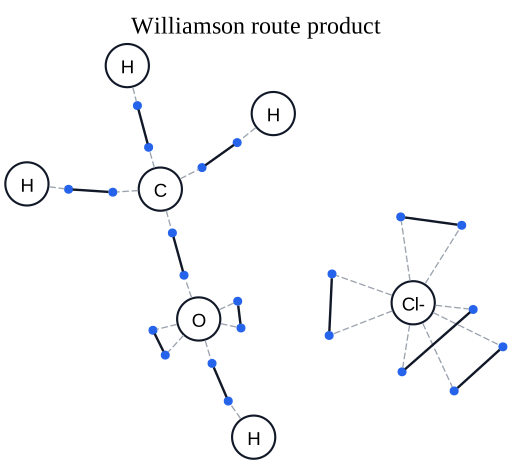
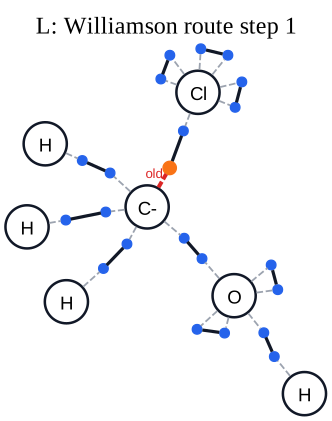
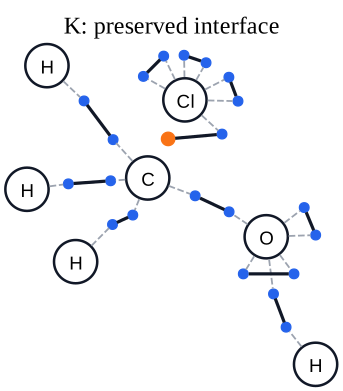
O-C sigma pair formed and C-Cl pair converted to chloride lone pair.
DPO-like Step Panels
Each primitive snapshot is shown as L/K/R. Red marks the ownership edge removed from L, orange marks the halfedge whose owner changes, and green marks the ownership edge created in R. K keeps the common atoms, halfedges, pair objects, and unchanged ownership records. For specified-next examples this is an explanatory span derived from route snapshots, not yet a checked executable rule application.
Williamson route step 1
Williamson substrate HEG sketch -> Williamson route step 1
h4: a1 -> a3
L
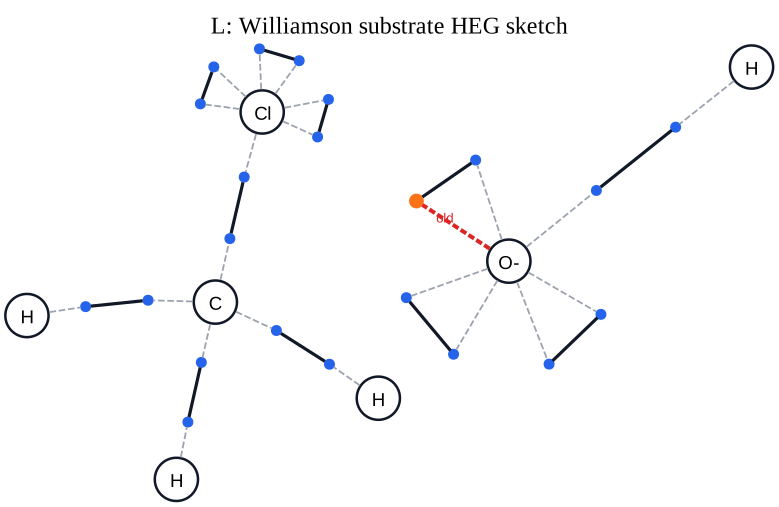
K
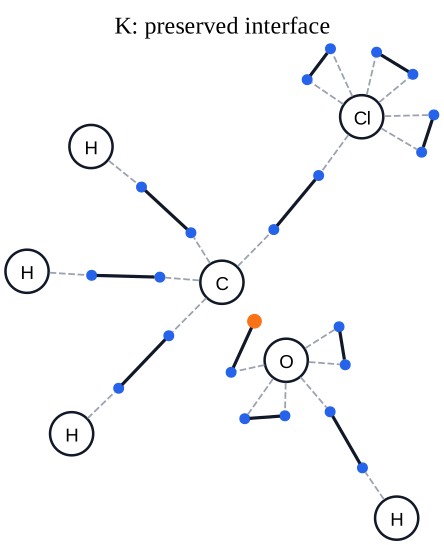
R
Williamson route step 2
Williamson route step 1 -> Williamson route product
h9: a3 -> a4
L
K
R
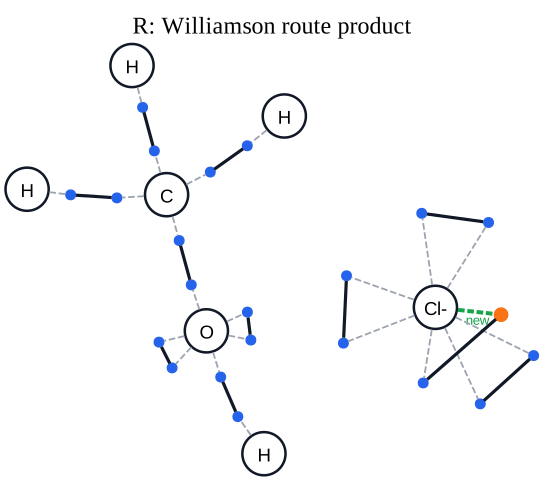
Reaction Sketch

Specified as primitive HEG ownership moves using O, C, H, and Cl labels supported by the current code.
Mechanism Flow

Primitive Steps
alkoxide lone pair forms O-C sigma pair
lone pair to shared pair: LP(O_alkoxide) -> sigma(O_alkoxide,C_alkyl)
requires alkoxide lone pair and no existing O-C shared pair
C-Cl sigma pair becomes chloride lone pair
shared pair to lone pair: sigma(C_alkyl,Cl) -> LP(Cl)
requires C-Cl leaving-group bond
Guards and Alternatives
Guards
- substrate carbon should be electrophilic alkyl carbon with leaving group.
- nucleophile oxygen must be alkoxide-like and not already bonded to the alkyl carbon.
- E2 elimination is not this rule; it must be a competing guarded rule.
Route probes
- SN2 substitution vs E2 elimination is the main nontrivial route search once a beta-H abstraction rule is added.
- Ambident nucleophiles would give O- vs C-alkylation alternatives.